
Sculpture has been slower than painting to correct its record on women, and the correction is still underway — the National Gallery of Australia was still running curator talks on Australian women sculptors as recently as 2024. What follows isn’t a survey of that history. It’s the working sculptors SOHO Galleries actually represents, several of whom have been building substantial careers in bronze and steel for decades.
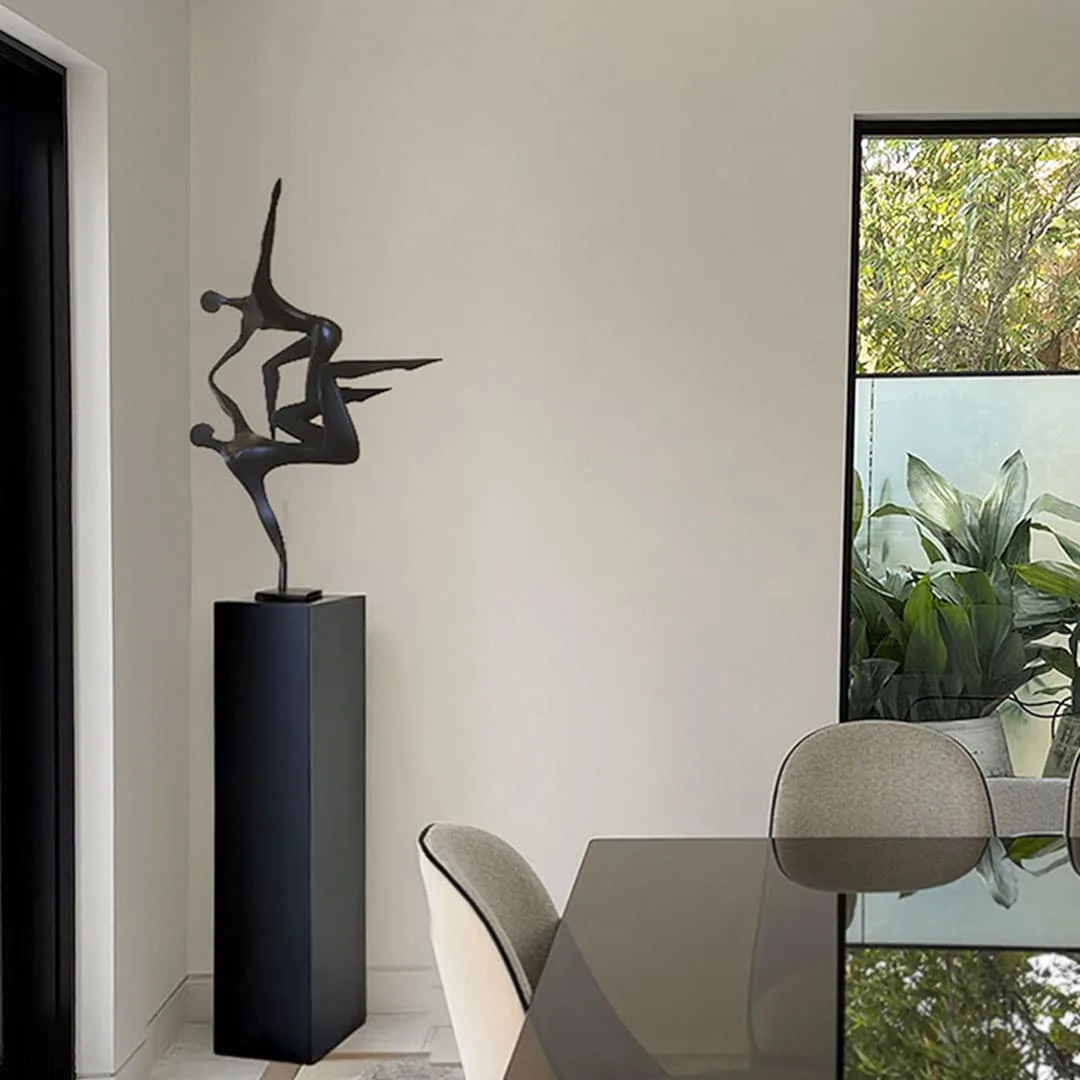
Larissa Smagarinsky
The most decorated sculptor in this collection, and one of the more remarkable careers in Australian sculpture generally.
Smagarinsky enrolled at Dushanbe Art College at fourteen to study painting, drawing, sculpture, ceramics, perspective and geometry, then completed a Master’s degree in architectural, decorative and monumental sculpture in St Petersburg — a technical grounding still visible in the bronzes. She began her career inside a Soviet sculptural culture built around formalism and military commemoration; her own work turned instead toward the human body, movement and connection. She left for Australia in 1982 and has worked here for over four decades.
She is one of very few sculptors to have held two solo exhibitions at the Sydney Opera House — the first for the Bicentennial in 1988, the second marking the building’s twentieth anniversary in 1993 — and is among the artists profiled in Slow Burn: A Century of Australian Women Artists (2010), published alongside the exhibition honouring Eva Breuer at the National Trust’s S.H. Ervin Gallery.
Movement runs through the work like a current. She returns repeatedly to dance, and to the instant a body holds motion inside stillness — a limb caught mid-gesture, a foot not yet touching the ground. A separate body of work pays homage to earlier artists: Woman of Picasso (1987), From Frame to Modigliani (1988), Bliss (1988, after Henry Moore) and Good and Evil (2002, after Barbara Hepworth).
She has completed fifteen public commissions in Australia and eight overseas, including Dance of Love at the Darling Harbour Exhibition Centre (1988), Together Through Time in the Macquarie University Sculpture Garden (1992), The Last Farewell memorial to the Light Horse Regiment at Holsworthy (1995), Supporting Hands in Paul Keating Park, Bankstown (2001), and Modern Ballet, a 4.5-metre bronze in the Chung-Chun Sculpture Park, China (2009). Her portrait commissions include former NSW Premier Neville Wran, in Parliament House, Sydney. Her work is held in the State Russian Museum Reserve Collection in Moscow, the Art Museum ICM in Geneva, the Coca-Cola Art Collection in the United States, and the Alexandria Library in Egypt.
Writing in Australian Art Collector, Anne Sarzin said she “has forged a career out of marble and bronze to become recognized as one of Australia’s leading sculptors,” and that the work is “consistently intent on capturing moments, spirits and essences.”
Larissa Smagarinsky has now retired from sculpting. Editions from her existing body of work remain available, and the final editions are being cast by her son, the sculptor and foundryman Michael Vaynman — so her hand still reaches the bronze. View available works →
Mela Cooke
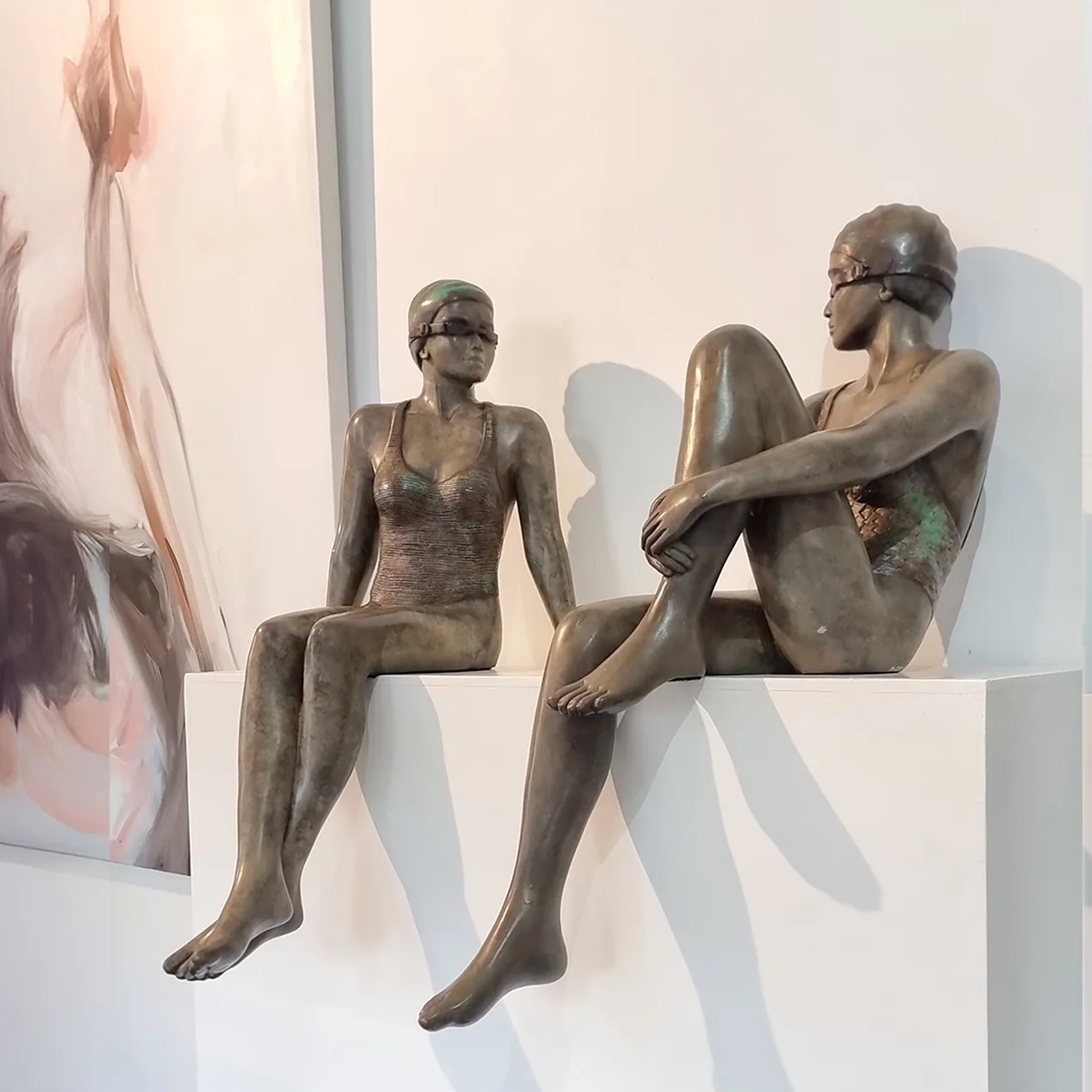
Cooke’s subject is the human body in water, and she has built a quiet reputation as one of the most distinctive voices in swimming sculpture in this country. Her bronzes capture movement in a way that is difficult to describe until you’re standing in front of one — the pull of a stroke mid-reach, the compression of a tuck. A Mela Cooke bronze doesn’t freeze a moment so much as hold the feeling of it, which is a different thing entirely. Her work runs from intimate tabletop studies to pieces over 1.5 metres, and sits in private collections and public spaces across Australia. View available works →
Astra Parker
The most conceptually driven sculptor here, and the one working at the largest scale. Parker is an Adelaide-based visual artist whose practice examines processes of structural change, drawing parallels between the world as explained by physics and the world seen sociologically — particularly perceptions of wholeness and separation in physical and social environments. In practice that means tall, spare mild-steel forms built for outdoor sites, some standing two and three metres. View available works →
Sonia Payes
Payes works monumentally — pieces in this collection reach five metres. Over the past twenty years she has fused an original photographic practice with digital and sculptural forms, and her blending of the femininity of the human face with the natural world has been an ongoing pursuit for well over a decade, carrying hints of environmental concern and, just as often, a note of homage to her daughter Ilana. She won the McClelland Achievement Prize, has permanent public work in Western Australia, and has exhibited internationally including a solo exhibition at Shanghai’s Urban Planning Exhibition Centre and a residency in rural Beijing. View available works →
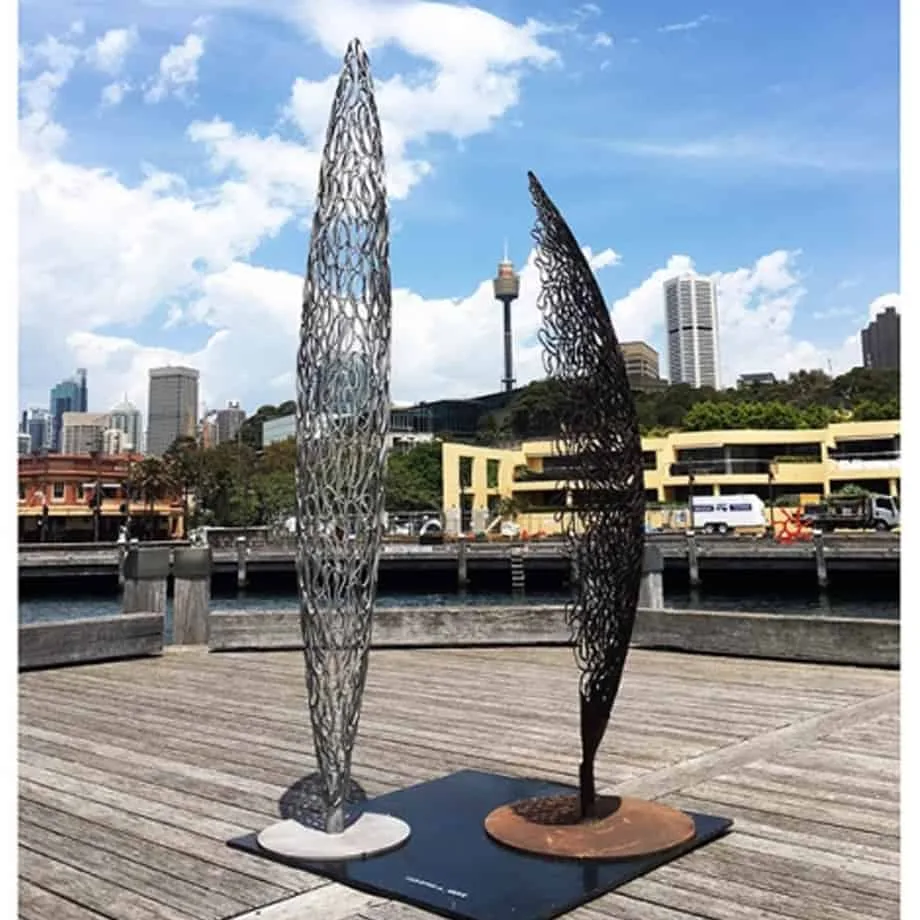
Still Standing / Standing Vessel – 2 & 3m — more by Astra Parker →
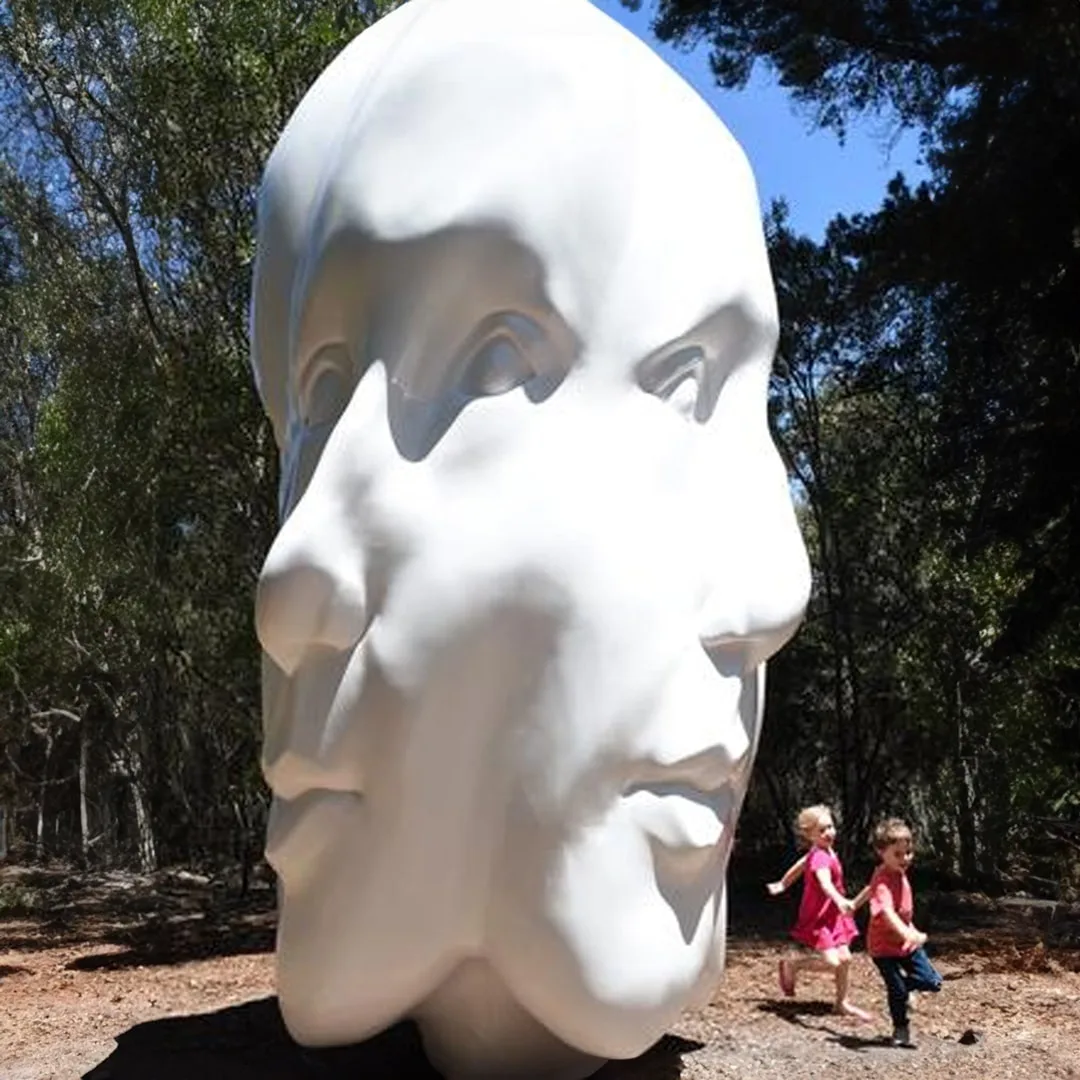
Woman – 5m — more by Sonia Payes →
Brenda Ingram
Ingram came to sculpture late and from another direction — years working in ceramics, carving and glasswork before she began sculpting and learning mould making at Sydney Art Space in 2015. Living on Sydney’s Northern Beaches, she describes the work as evoking “a zest for life,” aiming at inner amusement and a connection to your own moments of lightness and abandonment. Surfers and swimmers recur. View available works →
Helena Lillywhite
Lillywhite takes her work from life and nature, breaking forms down and playing with light and shadow. Likeness is always the starting point, but the result can stay faithful to it or move toward abstraction. She draws on a background in graphic design, sometimes beginning digitally with flat planes that are then resolved in three dimensions — an approach that shows clearly in her horses. View available works →
Denise Murray
Murray describes her sculpture as a celebration of the joy of life. Body language is the fascination: figures pared back to essentials, with the expression of the limbs and the way they move into space taking priority over detail. Dance recurs — “quite literally a hundred sculptures,” as she puts it — alongside beach and surf figures. View available works →
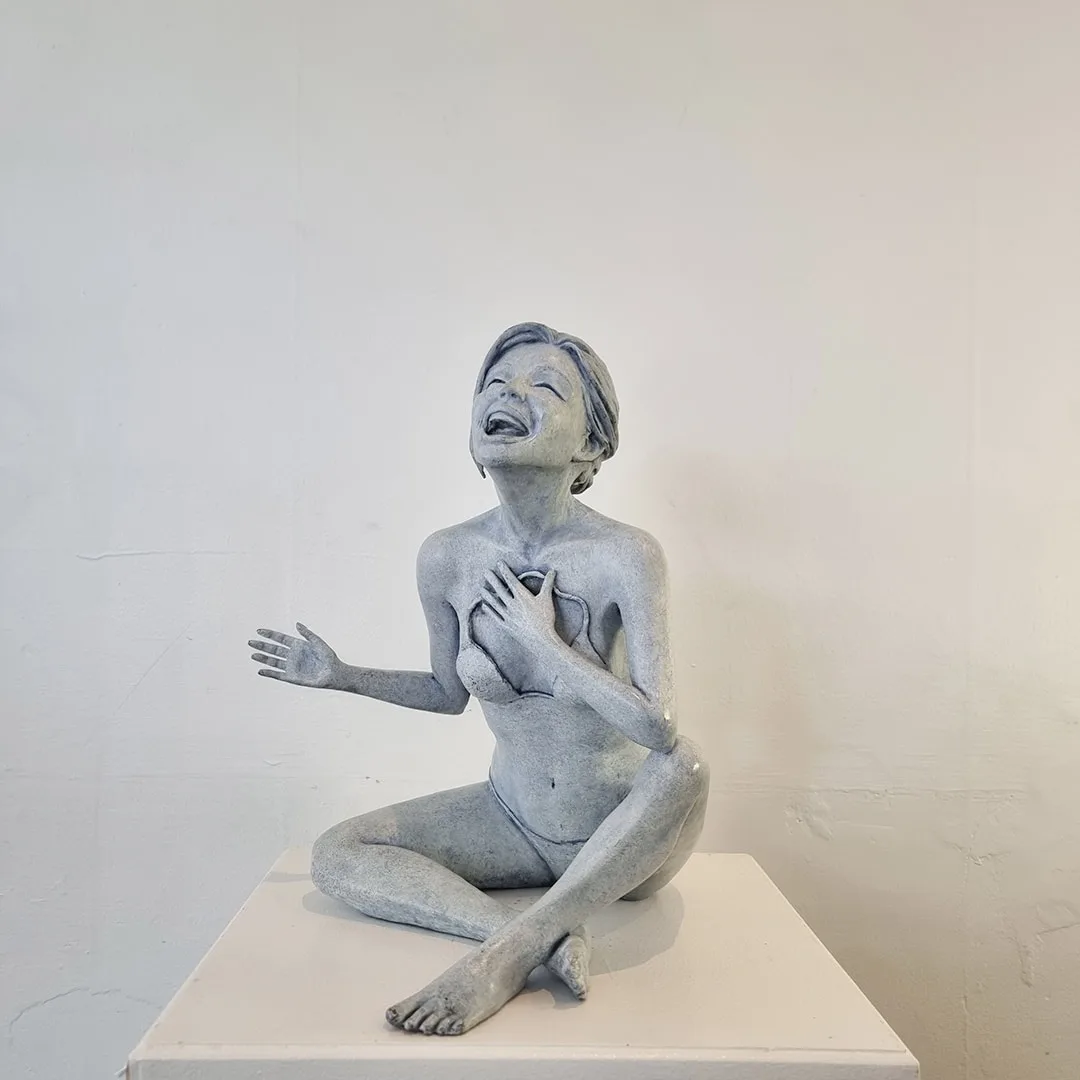
Summer – 34cm — more by Brenda Ingram →
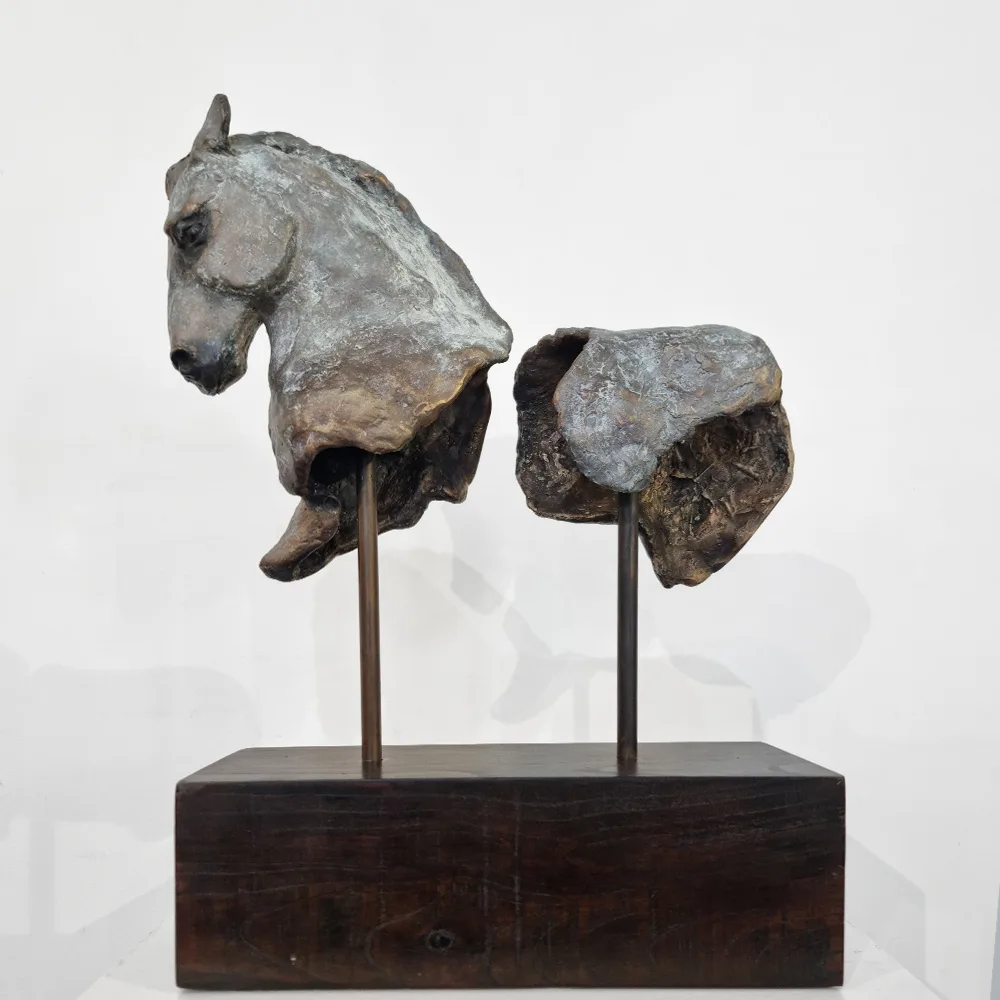
Equus II – 30x30cm — more by Helena Lillywhite →
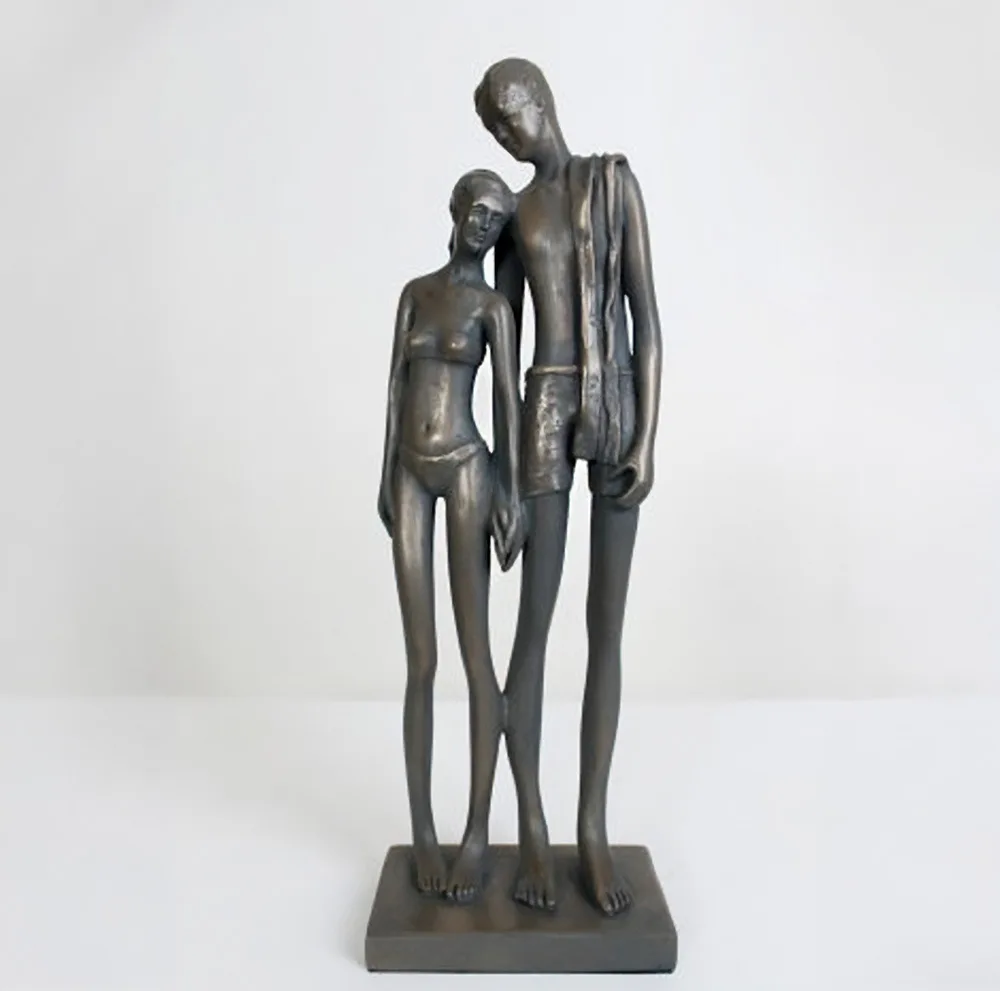
Beach Day – 35cm — more by Denise Murray →
A thread worth noticing
Put these seven together and something specific to this country surfaces. Mela Cooke’s swimmers, Brenda Ingram’s Northern Beaches surfers and Denise Murray’s beach figures form a coastal-figurative cluster you would be unlikely to find in a European collection. Alongside it runs a second thread — movement held still — that connects Smagarinsky’s dancers to Murray’s, across two entirely different training traditions: a St Petersburg master’s degree in monumental sculpture on one hand, and a self-directed Australian practice on the other.
The range is worth stating plainly too. Astra Parker’s three-metre mild-steel forms and Sonia Payes’s five-metre figures sit at one end; Helena Lillywhite’s 30-centimetre bronzes at the other. Prices run from around $3,995 to $59,990.
For the painting side of the collection, see our guide to Australian female artists and painters.
Frequently asked questions
Who are Australia’s most notable female sculptors? Historically, Inge King and Bronwyn Oliver are the names most often cited, alongside Margel Hinder and Jean Broome-Norton from an earlier generation. Among sculptors working and selling today, SOHO represents Larissa Smagarinsky, Mela Cooke, Astra Parker, Sonia Payes, Brenda Ingram, Helena Lillywhite and Denise Murray.
Which of these sculptors work at large or outdoor scale? Astra Parker works in mild steel at two to three metres, and Sonia Payes’s figures reach five metres — both suited to gardens, courtyards and architectural sites. Mela Cooke’s work extends past 1.5 metres.
Are Larissa Smagarinsky’s works still available? Yes. She has retired from sculpting, but editions from her existing body of work remain available, cast by her son Michael Vaynman, himself a sculptor and foundryman.
Do these sculptors accept commissions? Several do, in a specific size, material and finish. Contact us to discuss the site and the budget.
Can I see the work in person? Yes — our Woollahra gallery in Sydney carries a rotating selection. Contact us to arrange a viewing, and we can advise on delivery and installation Australia-wide.